
By Bill Thomas | October 30
“What causes pediatric cancer?”
It’s a question we’ve all pondered. A seemingly simple question with a nonetheless complex answer.
All cancers can ultimately be traced back to genetic mutations that interfere with the body’s ability to regulate cell growth. But what causes these genetic mutations? The truth is that there is no single trigger. Environmental factors and inherited genetics both play a role, as do unpredictable, spontaneous cellular errors that can occur at random.
One of the major differences between adult cancers and pediatric cancers is that childhood cancer development is less likely to be linked to lifestyle and environment due to the simple fact that children haven’t been alive long enough to accumulate harmful carcinogen exposure nor for their bodies’ DNA repair systems to age into inefficiency. This is also why childhood cancers are overall rarer than adult cancers.
The vast majority of childhood cancers are believed to be primarily the result of random cell errors and spontaneous mutations, not inherited genetics. Around 8–15% of pediatric cancers can be linked to genetic predisposition versus 5–10% of adult cancers, so while childhood cancer cases are more likely to be hereditary, the increased likelihood is very slight.
Nevertheless, when it comes to childhood cancer, even a slight increase in risk needs to be taken seriously; 8% of pediatric cancer cases equates to roughly 1 in 12 pediatric cancer patients, a not insignificant number. It’s important, then, to understand how hereditary cancers work and what steps to take if you or someone you know has an inherited genetic trait linked to childhood cancer development.
What is Hereditary Cancer Syndrome?
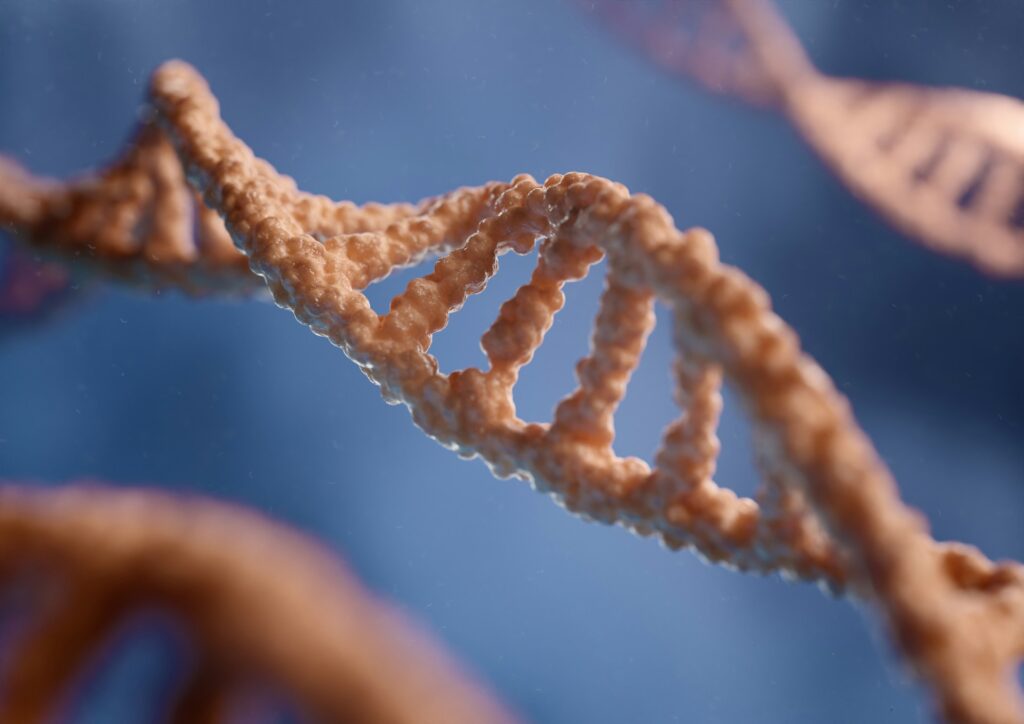
The term “hereditary cancer syndrome,” also known as “family cancer syndrome” or “inherited cancer syndrome,” can refer to any of a number of inheritable gene disorders that significantly increase a person’s lifetime risk of developing cancer.
Many hereditary cancer syndromes follow an autosomal dominant inheritance pattern, meaning that parents with a gene mutation have a 50% chance of passing it onto their child. This 1–in-2 chance is unaffected by the child’s sex or whether previous siblings did or did not also inherit the mutation. Although hereditary cancer syndromes can lead to cancer development at any age, some hereditary cancer syndromes are more likely to trigger oncogenesis during childhood.
The most common types of hereditary cancer syndromes include…
- Li-Fraumeni syndrome (LFS) – Caused by a mutation in the TP53 gene. Children with LFS have an elevated risk of developing a wide range of cancers including brain tumors, adrenal gland cancers, sarcomas and leukemias.
- Neurofibromatosis type 1 (NF1) – Caused by a mutation in the NF1 gene. Children with NF1 mutations have an elevated risk of developing low-grade gliomas, malignant peripheral nerve sheath tumors and rhabdomyosarcomas.
- Hereditary retinoblastoma – Caused by a mutation in the RB1 gene. Children with RB1 mutations have an elevated risk of developing tumors in the retina.
- Multiple endocrine neoplasia (MEN) – Caused by a mutation in either the MEN1 gene or the RET gene. Children with MEN1 gene mutations have an elevated risk of developing tumors in the body’s hormone-producing endocrine organs, such as the parathyroid glands, pituitary gland and pancreas. Children with RET gene mutations have an elevated risk of developing medullary thyroid cancer.
- Familial adenomatous polyposis (FAP) – Caused by a mutation in the APC gene. Children with FAP have an elevated risk of developing precancerous colorectal polyps, which can progress to colorectal cancer.
- Von Hippel-Lindau syndrome (VHL) – Caused by a mutation in the VHL gene. Children with VHL syndrome have an elevated risk of developing tumors in the brain, spine, eye, kidneys, pancreas and genital tract.
- DICER1 syndrome – Caused by a mutation in the DICER1 gene. Children with DICER1 syndrome have an elevated risk of developing pleuropulmonary blastoma, a rare and aggressive tumor that grows in the lung or pleural cavity and primarily affects children under the age of 6. Children with DICER1 syndrome may also develop tumors in their kidneys, ovaries, thyroid and other organs.
- Beckwith-Wiedemann syndrome (BWS) – Caused by a mutation in the CDKN1C gene. Children with BWS have an elevated risk of developing embryonal tumors, most commonly in the kidney (Wilms tumor) and liver (hepatoblastoma).

Screening for Hereditary Cancer Syndromes
Having a family history of cancer could be a warning sign of hereditary cancer syndrome. This is especially true in cases where multiple relatives develop the same or related cancers, develop rare cancers, or develop cancers at a young age.
If your family has a history of cancer, talk to your doctor about potentially scheduling regular cancer screenings, both for yourself and for your children. Early detection significantly improves survival rates, can reduce the need for toxic or invasive treatments, and may even prevent cancers from developing in the first place.
That said, it’s important to note that a family history of cancer doesn’t necessarily indicate the presence of hereditary cancer syndromes. Family members who live close together or share similar lifestyles are more likely to be exposed to the same environmental factors, such as air pollution or other cancer-causing carcinogens. Additionally, while childhood cancer is relatively rare, cancers in general are increasingly common diseases, so it’s not unusual for multiple relatives to develop cancers independently.
If you are concerned about hereditary cancer syndromes, genetic testing can reveal if your child has inherited any genetic mutations that increase their risk of developing cancers. Again, talk to your doctor to see if they recommend genetic testing.
Finally, if you or a loved one have already been diagnosed with one or more cancers, a doctor may recommend biomarker testing. Biomarker testing can be used to identify what specific genetic mutations are driving a patient’s cancer, providing valuable guidance in developing treatment plans. Additionally, biomarker testing could identify the presence of mutations related to hereditary cancer syndromes, which could in turn help other family members with early detections and/or prevention.
Although hereditary cancer syndromes account for a relatively small percentage of pediatric cancer cases, understanding their role in cancer development can make a meaningful difference in early detection, prevention and treatment. Know your family history, keep an eye out for potential warning signs, and don’t hesitate to share your concerns with a family doctor. Not all childhood cancers can be prevented, but identifying inherited cancer risks can play a key role in supporting early intervention and improving outcomes for children.
To stay up-to-date with all the latest news shaping the future of pediatric cancer treatment, don’t forget to follow Pediatric Cancer Research Foundation’s Profectus Blog!