

By Bill Thomas | October 14
It was once believed to be an impossibility. Now, it is a reality.
At the 2026 American Society of Clinical Oncology (ASCO) Annual Meeting, Dr. Brian M. Wolpin, director of the Hale Family Center for Pancreatic Cancer Research at Dana-Farber Cancer Institute, presented the results of a clinical trial studying daraxonrasib, a novel pancreatic cancer drug. Findings showed that the first-in-class medication nearly doubled survival outcomes for patients with previously treated metastatic pancreatic cancers.
The ASCO audience responded to Dr. Wolpin’s presentation with a thunderous, 42-second standing ovation.
Daraxonrasib’s efficacy as a treatment for pancreatic cancer is certainly worthy of applause, but what really has the medical community excited is what daraxonrasib represents: a game-changing breakthrough previously thought impossible. It is a breakthrough with implications that go far beyond just treating pancreatic cancers; this could signal a revolution in how we treat a wide variety of cancers… including many pediatric cancers.
How Daraxonrasib Works

Developed by pharmaceutical company Revolutionary Medicine under the brand name Rasonque, daraxonrasib is the first in a new class of drugs, known as RAS(ON) inhibitors, that are capable of neutralizing overactive RAS proteins.
Proteins produced by the RAS gene family (which includes KRAS, NRAS, and HRAS) function as molecular switches inside cells; they turn signals “on” or “off” to control cell growth and division.
Normal RAS proteins cycle between an active state and an inactive state, but mutations in RAS genes prevent the proteins from turning off, locking the protein in a permanently active state that can lead to cancer development.
Notably, 90% of all pancreatic cancers are linked to RAS gene mutations, with most such mutations specifically affecting KRAS.
The majority of cancer drugs work by binding directly to the proteins they seek to control. However, mutated KRAS proteins lack targetable drug-binding pockets. As a result, most cancer researchers believed that creating a direct RAS inhibitor was impossible, calling it “undruggable.”
Daraxonrasib dispels that notion once and for all. Instead of trying to attach itself to KRAS, daraxonrasib first attaches to an intracellular helper protein called cyclophilin A (CypA), reshaping its surface so that it can bind to the mutated KRAS. Once the three-part binding process is complete, CypA physically blocks KRAS from binding to CRAF and SOS, the other two essential components of the signaling pathway responsible for cell proliferation. Consequently, the signaling cascade that causes cancerous cell growth is interrupted, preventing further spread and allowing for tumor regression.
Why Daraxonrasib Matters
When Ben Sasse, the former U.S. senator from Nebraska, announced last December that he’d been diagnosed with metastatic pancreatic cancer, he called the diagnosis a “death sentence.” Sasse’s doctors told him he likely had 3–4 months to live.
That was before he started taking daraxonrasib.
Now, nine months after he first revealed his diagnosis, Sasse is still with us. His tumor volume has shrunk by more than 76 percent. In an interview with 60 Minutes, Sasse credited daraxonrasib with enabling him to outlive his original prognosis, calling it a “miracle drug.”
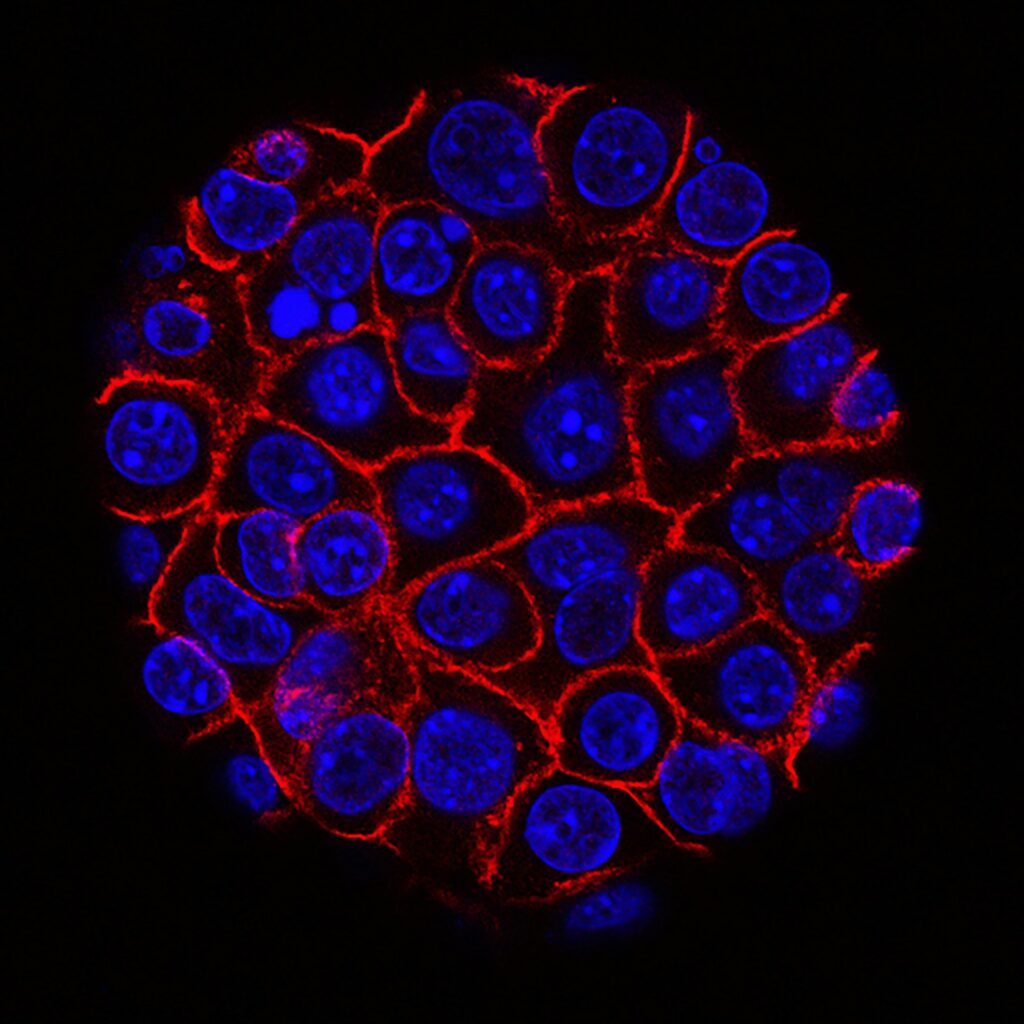
On August 26, the U.S. Food and Drug Administration (FDA) approved daraxonrasib as a treatment for patients with metastatic pancreatic cancers. It’s exciting news not only for those affected by pancreatic cancers, but for the wider cancer community as a whole. RAS mutations can be found in many other cancers, including pediatric cancers. Indeed, daraxonrasib is already being studied as a potential treatment for other cancers.
More importantly, the mechanism by which daraxonrasib interacts with KRAS could lead to the development of more drugs that utilize a similar approach to binding with various other “undruggable” RAS mutation-linked cancers. The success of daraxonrasib proves that cancer drugs don’t necessarily need to bind directly to the surface of cancer-causing proteins, but can instead piggyback onto other proteins that facilitate the binding process.
In short, daraxonrasib represents a seismic shift in the way we think about treating cancers and opens up a whole new avenue of possibility for cancer drug development.
What This Means for Pediatric Cancer

Pancreatic cancers rarely occur in children and young adults, being most commonly diagnosed in patients over the age of 60. However, the same RAS mutations that drive many pancreatic cancers also play a role in numerous childhood blood cancers, neuroblastomas, low-grade gliomas, and rhabdomyosarcomas. RAS mutations occur in about 40-50% of pediatric leukemias, including acute myeloid leukemia (AML) and acute lymphoblastic leukemia (ALL), and 100% of juvenile myelomonocytic leukemia (JMML) cases.
Since 2019, Pediatric Cancer Research Foundation has helped fund the work of Dr. Elliot Stieglitz, a pediatric oncologist at UCSF Benioff Children’s Hospital who is investigating targeted therapies for JMML.
As a PCRF legacy researcher, Dr. Stieglitz has been studying the drug trametinib, a MEK inhibitor with significant potential for treating JMML. MEK inhibitors like trametinib work by blocking the downstream signaling of the RAS/RAF/MEK/ERK pathway, bypassing the upstream RAS altogether.
Dr. Stieglitz, who has called daraxonrasib the most important cancer drug of 2026, recently received a 5-year grant from the National Cancer Institute to study the determinants of response and resistance for daraxonrasib in JMML. How might daraxonrasib’s efficacy in binding with KRAS influence Dr. Stieglitz’s work with trametinib? Could trametinib and daraxonrasib be used in combination to more effectively treat patients with JMML? When will we see the first clinical trial studying daraxonrasib as a treatment for JMML?
For now, these and other questions remain unanswered, but the possibilities posed by daraxonrasib’s success are virtually endless. The “undruggable” nature of RAS, once a major hurdle for those seeking to develop better treatments for RAS mutation-driven childhood cancers, is no longer insurmountable.
Breakthroughs like this are exactly why it’s so important for PCRF and private donors everywhere to continue supporting pediatric cancer research. All of us here at Pediatric Cancer Research Foundation await the future with optimism and excitement, confident that many more life-saving breakthroughs lie ahead of us and resolute in our commitment to ensuring that the researchers at the forefront of those breakthroughs have the resources they need to drive innovation.
To stay up-to-date with all the latest news shaping the future of pediatric cancer treatment, don’t forget to follow Pediatric Cancer Research Foundation’s Profectus Blog!