
By Bill Thomas | July 22nd
It wasn’t long after the discovery of X-rays in 1895 that physicians realized radiation could be used to treat cancer. Now, more than 130 years later, radiation therapy is one of the most common and reliable treatments for many cancers. Over time, researchers in the field of radiation medicine have made great strides in finding ways to make radiation therapy safer and more effective. But there’s still more work to be done.
Radiation therapy works by bombarding tumor cells with high-energy waves or particles. This can have the positive effect of permanently damaging the DNA in the tumor cells, preventing them from replicating. Unfortunately, one of the downsides of radiation therapy is the risk of damaging a patient’s healthy cells as well. Using radiation to treat hard-to-reach pediatric cancers like medulloblastoma, which attacks a child’s developing brain and spine, is critical foir maximizing the potential for cure but can result in a number of negative side effects, including long-term effects on cognition, growth, hearing, and hormone production.
“Medulloblastoma and some other cancer types have a high chance for spreading into the fluid that surrounds the brain and spinal cord. When using current standard approaches to prevent
this, we deliver proton beam radiation to the brain and spine. Proton therapy limits the dosage of radiation to the chest and abdomen compared to other approaches, but still requires treatment of the entire normal brain as well as the normal cells of the spinal cord and the vertebral bodies,” Dr. Zachary Morris, Associate Professor and Chair of the Department of Radiation Medicine at the University of Wisconsin School of Medicine and Public Health, says.
“As a physician, it’s often hard not to have mixed feelings because we know this is a necessary treatment. If we don’t do this, there is an unacceptably high chance this disease will come back in a fatal way. But if we do it, we know there will also likely be lasting effects that these children will be dealing with for the rest of their lives.”
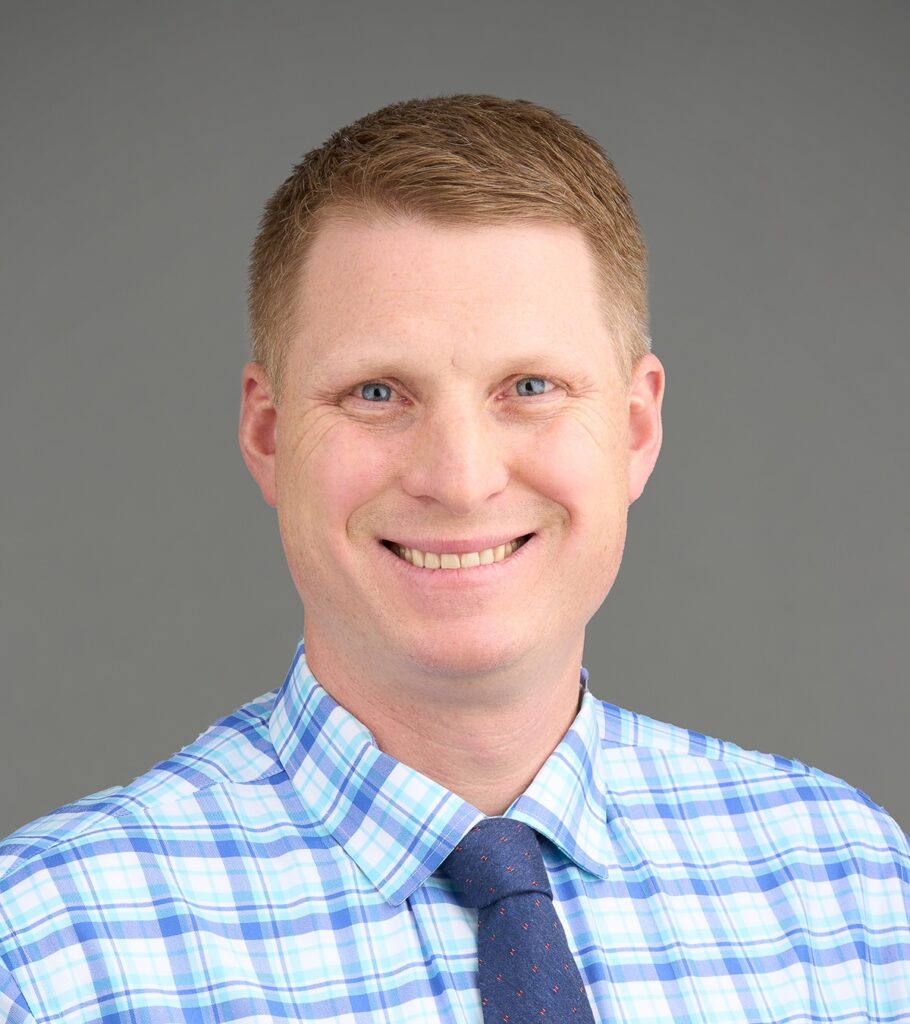
As a child growing up in Rockford, Illinois, Dr. Morris had both friends and family members who were diagnosed with cancers. That personal experience is, in part, what motivates his research. Hoping to reduce the toxicity of radiation treatments for childhood cancer patients, Dr. Morris is working closely with University of Wisconsin neurosurgeon, Dr. Mahua Dey, to test an innovative radiopharmaceutical drug called NM600, which can be directly injected into the fluid around the brain and spine to deliver molecular-targeted radiation directly to tumor cells while sparing healthy brain cells and bony tissue.
If NM600 proves effective in treating medulloblastoma, it could reduce the amount of traditional radiation therapy that patients require or even potentially replace traditional brain and spine radiation therapy for this patient population entirely.
“NM600 was developed by two radiochemists here at the University of Wisconsin, Dr. Reinier Hernandez and Dr. Jamey Weicher and they are closely involved with this work. The drug is a theranostic radiopharmaceutical, which means it’s an agent that carries a radioactive isotope within it. When it’s brought to the cancer cells, it undergoes radioactive decay and emits radiation to the tumor,” Dr. Morris explains.
“Most other radiopharmaceuticals are developed to treat a specific type of cancer; they might target a specific protein that is overexpressed in the cancer cells, for example. What makes NM600 a little different is that this drug has a lipid-based targeting mechanism. Cancer cells develop cell membranes with different lipid composition compared to normal cells. That means NM600 isn’t actually specific to just one type of cancer. It could potentially work for almost any type of pediatric cancer.”
Indeed, concurrent with Dr. Morris’ own research exploring NM600 as a treatment for medulloblastoma, a number of other research projects are also testing the drug’s efficacy for other cancers in studies led by Archeus Technologies, University of Wisconsin-affiliated biotechnology company.
This has proven to be a boon for Dr. Morris’ research, as it allows his team to incorporate and build on data from those other studies. The same week we spoke with Dr. Morris, the first ever human patient was being treated with NM600 in a study focusing on adult patients with metastatic cancers. Pairing that information with the positive results his own team is seeing in mouse models, Dr. Morris is optimistic that this aspect of his research could progress to clinical trials quickly.
That aspect is only half of Dr. Morris’ PCRF-backed research, however. In addition to testing NM600 as a means of reducing toxicity and improving quality of life for medulloblastoma patients, Dr. Morris is working together with University of Wisconsin Carbone Cancer Center Director, Dr. Christian Capitini, to investigate the potential benefits of combining NM600 with CAR T cell therapy, a form of immunotherapy that has shown significant promise in the treatment of pediatric brain cancers.
“The first part of our research, using NM600 to reduce or replace traditional radiation therapy when treating medulloblastoma, is hopefully something we can bring to kids in the next five years or so. As exciting as that is, the second part of our research might be even more exciting, although it will take longer,” Dr. Morris says.
“About a year ago, our team led by Dr. Quaovi Sodji put forward the first publication ever to preclinically look at using CAR T cells in combination with radiopharmaceuticals. We showed that a very low dose of the radiopharmaceutical, well below what would be therapeutic on its own, can actually help bring the CAR T cells to the tumor more effectively and can also help to overcome the exhaustion of those CAR T cells. It’s going to take time to figure out how to optimize this, but my hope is that we could be in a situation where we’re not only reducing toxicity, but also actually curing diseases that we otherwise haven’t been able to cure.”
Pediatric Cancer Research Foundation is honored to award Dr. Morris’ work with the Will Irwin Research Grant, made possible by the generosity of Joanna and Mike Irwin.
If you would like to help support innovative and potentially life-saving research like this, please consider donating to PCRF’s Powering Research Fund, which enables us to continue supporting work that reduces toxicity, improves patient quality of life, boosts survival rates, and accelerates cures.
To stay up-to-date with all the latest news shaping the future of pediatric cancer treatment, don’t forget to follow Pediatric Cancer Research Foundation’s Profectus Blog!